


Walkman
ListenTell the signal from the noise.
- What is really happening?
- What has changed?
- What has not changed?
- What are we listening to?
- What are we not listening to?
- Which information is truly decisive?
Listen first. Interpret after.
Walkman · Moka · Sextant
A strategic framework to read the company: listen to the signal, adapt the shape, choose the route.

The instrument of listening.
High FidelityThe instrument of transformation and variable geometry.
Variable GeometriesThe instrument of orientation.
The TrajectoryGrowing without losing your centre.
A family business does not have to choose between continuity and transformation. It must find a dynamic condition in which it can change, grow and stay connected to its own centre. This is the idea of Oriented Growth.
Growing for Generations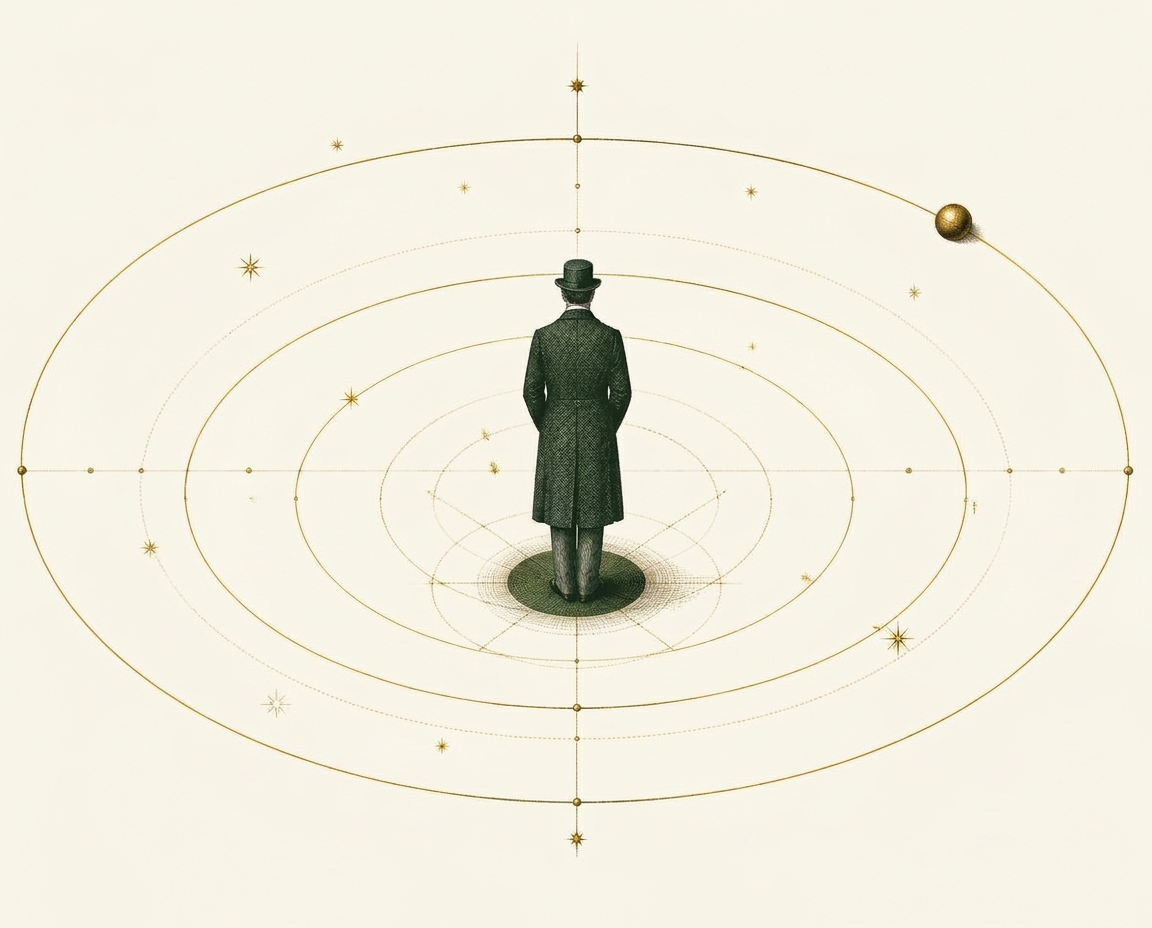
Before changing a company you have to understand what is really happening.
Before choosing a direction you have to tell the signal from the noise.
Before growing you have to know what you do not want to lose.
Tell the signal from the noise.
Listen first. Interpret after.
Change the form without losing the centre.
Change the form. Do not lose the centre.
Choose a route when the future is not yet fully visible.
You do not need to see the whole future to choose the next direction.
The centre
Every company has something that does not necessarily appear in its accounts.
A knowledge. A relationship. A way of working. A responsibility. A memory. A vision.
The Method does not decide what the centre is. It helps to recognise it.
Because only what is recognised can be transformed without being lost.
Family · Industry · Founder
What has to be handed on.
What has to keep competing.
What the company originated from.
Continuity is born when these three dimensions manage to transform without losing their relationship.
The PineOriented Growth is not a fourth instrument. It is the Energy Circle Strategy path: the bridge for European family SMEs going through a transition of value and governance. Its narrative instrument is the business novel produced by Energy Circle Publishing. Its natural destination is the threshold of The Pine.
Walkman is not a universal consulting system. It helps to understand what is happening, recognise what matters, adapt what must change and choose a direction.
These three instruments live inside a larger work: series, books and excerpts.
Oriented Growth →The doors
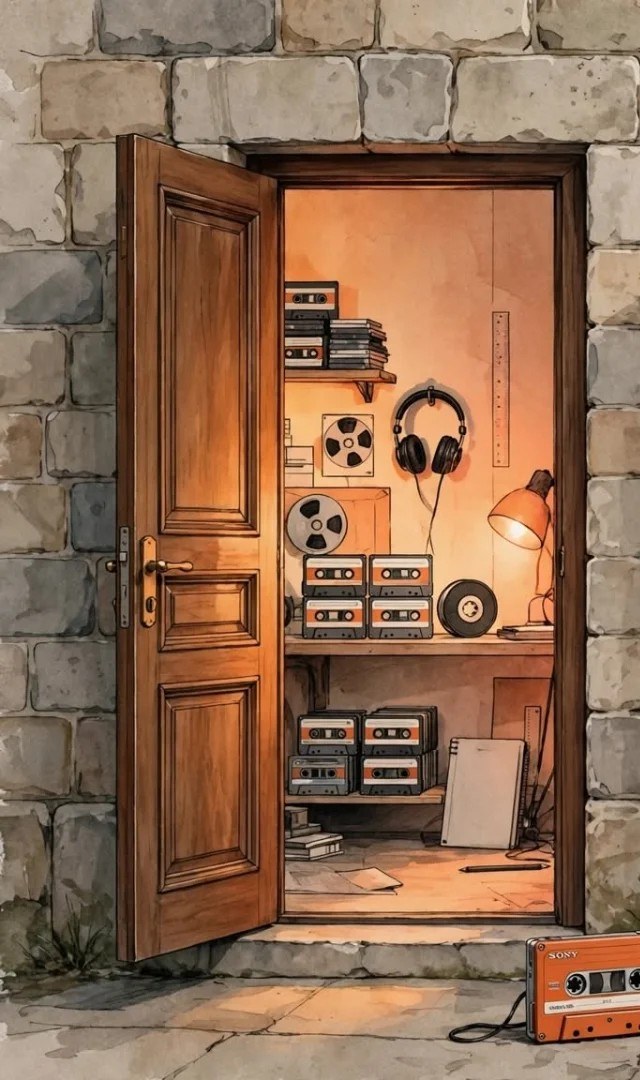
I. Listening to the signal
3 volumes • 120'
For: founders, successors and function heads who no longer speak to each other.
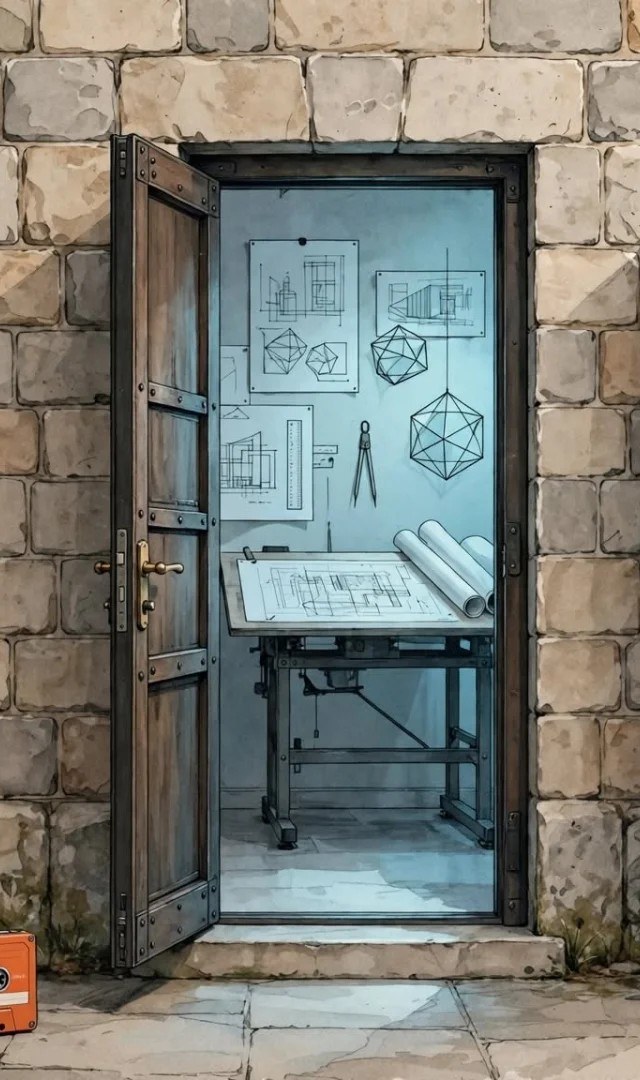
II. Adapting the form
3 volumes • 120'
For: revenue has changed, roles have not, tension is high.
 New
NewIII. Choosing the course
3 volumes • 120'
For: generational transition — handing down the course, not just the company.
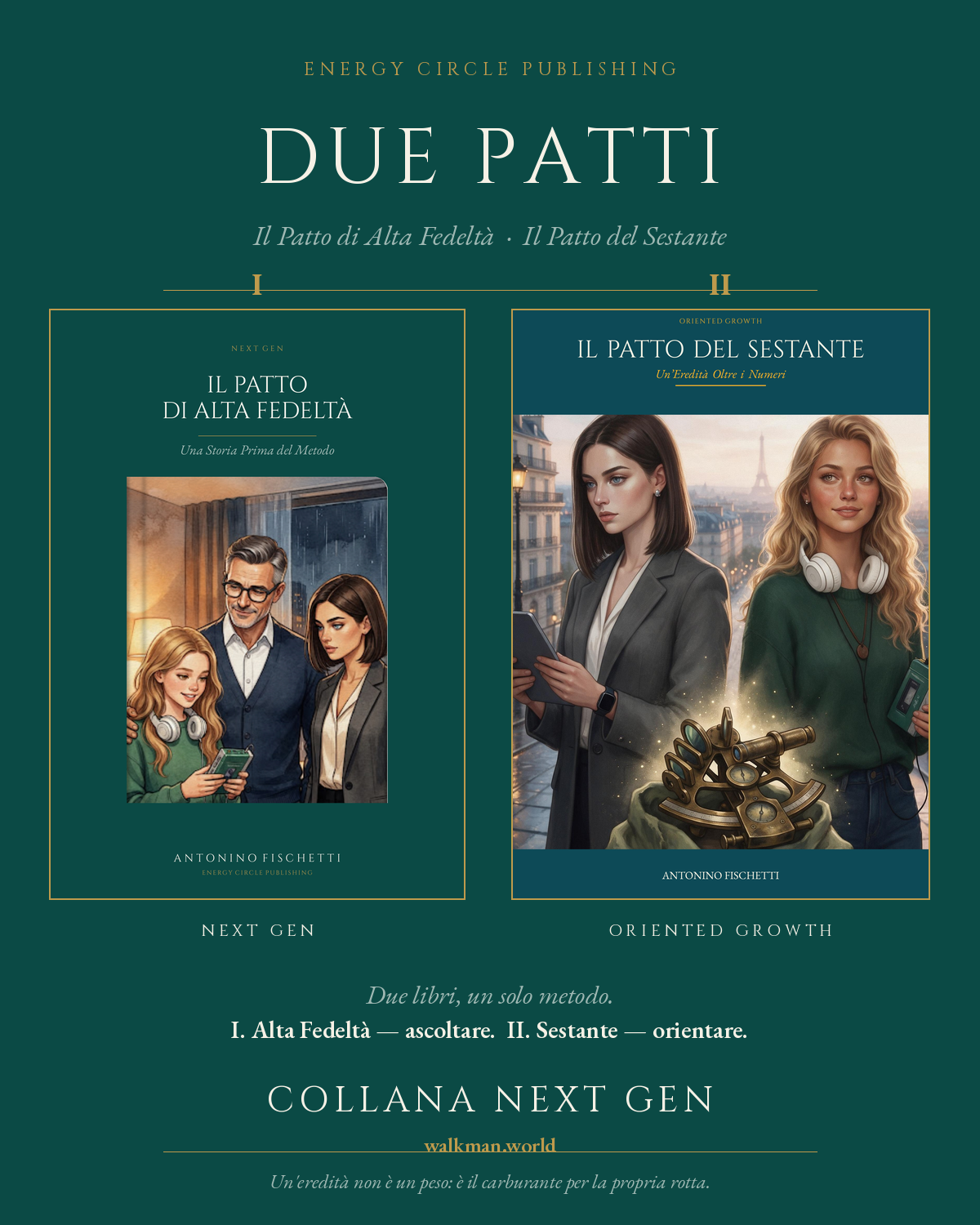 For teens
IV. Handing down the method
2 pacts + 1 new story • illustrated stories
For: teenage readers — the method before the method, in illustrated stories (Italian edition).
Two tests
Where you start
12 questions, 3 minutes, no data: measures how well you listen to the signal before deciding, and tells you which series to start from.
Take the Listening testWhere you are heading
9 questions on direction, course and crew: shows whether you share a course or are sailing by sight.
Take the Sextant testThey don't overlap: one measures listening, the other orientation. Together, six minutes.
From reading to the book
The ideas on this page come from the Oriented Growth volumes. The library holds every book with its free excerpt and its Amazon edition; once you have read it, an honest review helps these practices reach other readers.
Ask the method
The AI-generated answer relies only on the site's excerpts and content, and points you to the pages to read.